
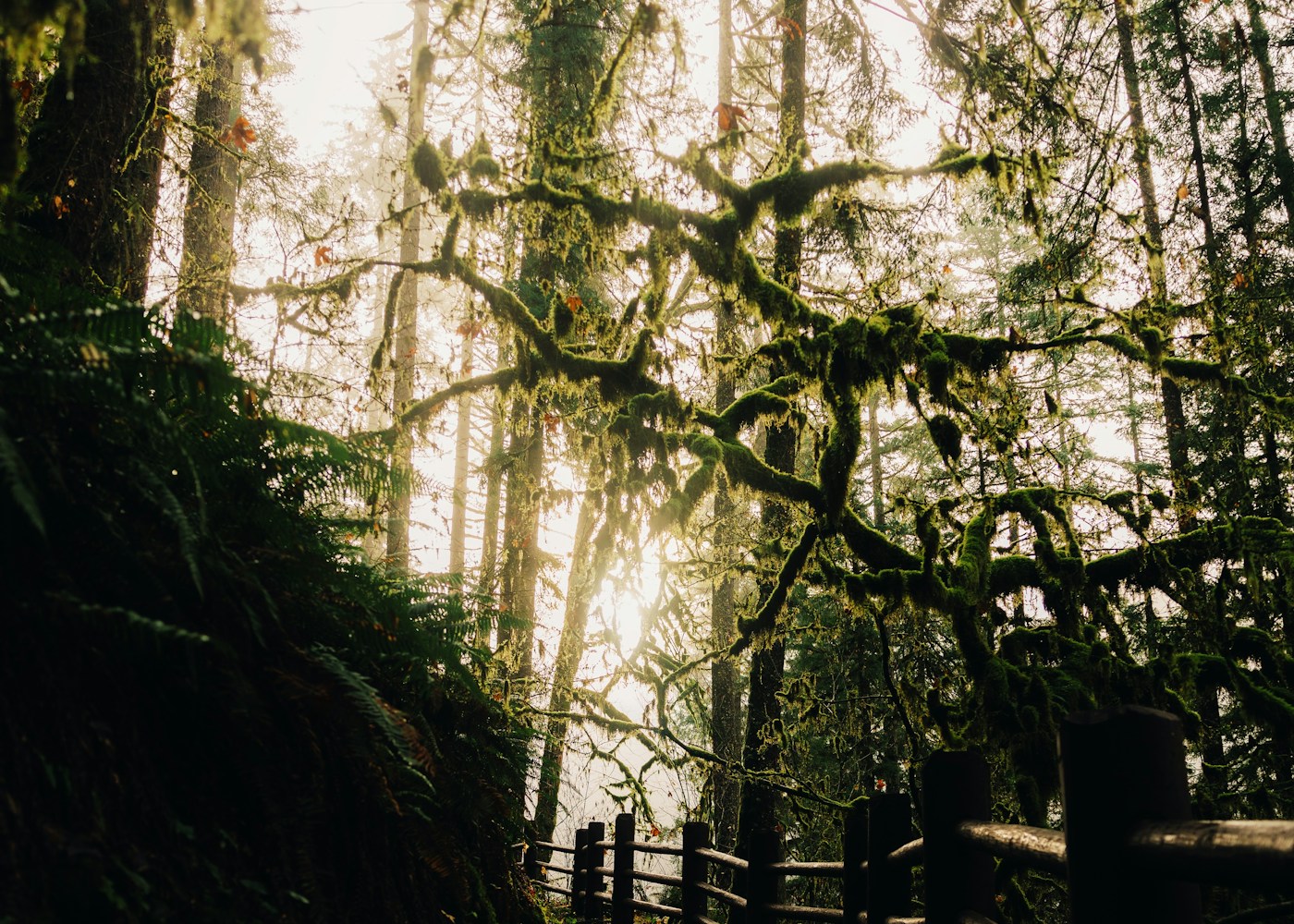
Trees hold the snow, the light, and the quiet. They also ask more of you.
Tree skiing is where a lot of us fall in love with skiing all over again: soft snow days after a storm, shelter when it’s blowing up top, and lines that feel like your own. It also carries risks open runs don’t. Here’s how we think about it.
Never alone.
This is the one rule that matters most. Ski the trees with a partner, and stay close enough to see them and reach them quickly.
- Keep visual contact. Not “meet at the bottom.” One skis a short pitch, stops where they can see the other, and waits.
- Agree on a plan before you drop in: the line, the exit, and where you’ll regroup.
- Carry a charged phone and know each other’s numbers. Save the ski patrol number for the mountain you’re at.
- If you lose sight of your partner, stop, call out, and go back to find them. Don’t assume they went ahead.
Know what a tree well is.
A tree well is the loose, deep snow around the base of a tree, often hidden under low branches. Conifers like the firs and hemlocks of the Northwest are especially prone to them. A skier who falls in head first can be trapped and suffocate in minutes. It’s called snow immersion suffocation, and it happens most in deep, fresh snow.
The simple habit: look at the gaps, not the trees, and give every tree, especially big ones with low branches, more room than you think it needs.
If you go in.
- Try not to go head first
- If you feel yourself falling near a tree, grab branches or the trunk and try to stay upright, feet downhill.
- Protect your airway
- If you’re in, make space around your face with your hands and arms, and keep it. Breathe slowly.
- Don’t thrash
- Struggling packs snow around you. Move carefully, and only if it’s helping.
- Partners: move fast
- Call for help, then go straight to them. Dig in from the side toward the face and clear the airway first. Don’t try to pull them out by the legs.
How we read a glade.
Before we commit to a stand of trees, we look for a few things:
- Spacing
- Start in widely spaced, well-traveled glades near a trail. Tight trees are slower and leave less room for error.
- Where it comes out
- Know the exit. Trees that funnel into a creek, a cliff band, or a long flat traverse are a different day out. If you don’t know, follow the tracks of people who do, or ask a local.
- The snow
- Trees shelter snow from wind and sun, so they stay soft after open runs firm up. On some aspects, that same snow can be heavy or crusty. A test run on a short pitch tells you a lot.
- The fall line
- Notice where gravity wants you to go. Most of us drift off the fall line in trees; staying aware of it keeps you near your exit.
- Boundaries
- Respect ropes and closures. Terrain beyond the resort boundary isn’t controlled for avalanches, and needs avalanche training, gear, and a forecast check.
Skiing it.
- Slow down. Choose a pace where you can stop in a few turns, every turn.
- Look two or three gaps ahead, not at the next tree. Your skis follow your eyes.
- Make short, round turns and control speed with turn shape rather than hard skids.
- Take your hands out of your pole straps, so a pole basket caught on a branch can’t hold your arm.
- Pick the line and the stopping spots before you go. Stopping beside a tree, rather than above it, keeps you out of the well.
What to carry.
- A helmet and goggles with a low-light lens. Trees are darker than you think.
- A charged phone, somewhere warm, and a partner’s number.
- A whistle on your jacket or pack strap.
- Beyond the boundary: a beacon, shovel, and probe, the training to use them, and that day’s avalanche forecast.
Shorter, softer-flexing skis with some rocker make tight trees easier. The boot guide and ski shortlist cover choosing them.